01 · COLLECTION
KNNN Collection
Explore objects shaped through Korean materials, traditional techniques, and contemporary design.
Loosely comparable to silver tableware in Europe, Yugi could serve both practical and high-status roles in Korea. Today, copper and copper alloys are also known to show antimicrobial activity under certain conditions.
Yugi has lived on Korean tables and in Korean daily life for centuries. Its story is not only about metal, but about how material, skill, and repeated use become part of everyday culture.
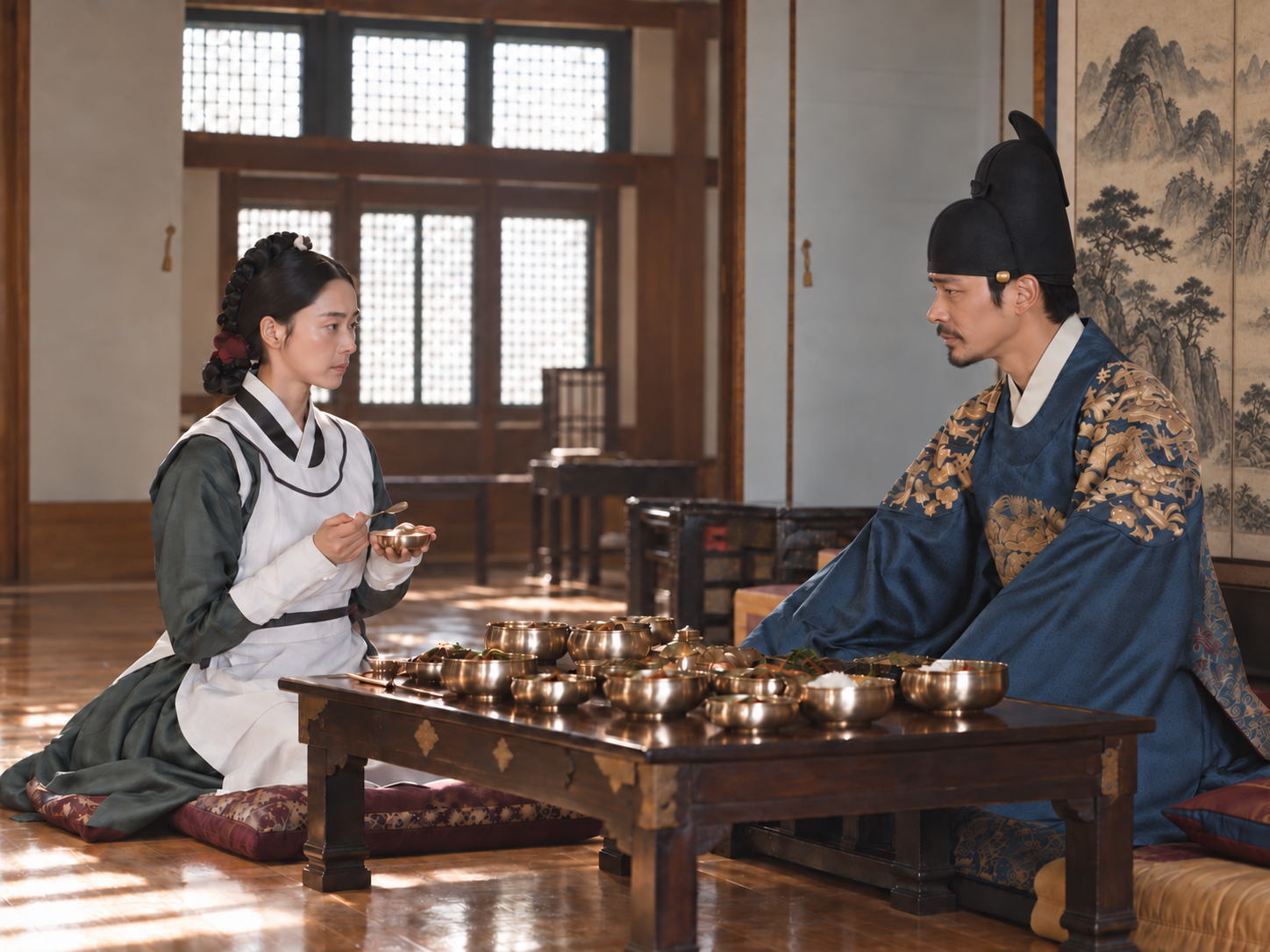 IMAGE 01 · MAIN YUGI VISUAL
Yugi was used at the Joseon royal court
Yugi (유기, 鍮器) is a broad Korean term for traditional metalware made from copper-based alloys commonly called notsoe (놋쇠) in Korean. It was used not only for bowls and dishes, but also for ritual vessels, musical instruments, basins, trays, and other objects of daily life.
There is no single alloy or single way to make Yugi. Bangjja Yugi is traditionally forged from a copper-and-tin alloy — commonly described today as about 78% copper and 22% tin — while some cast Yugi uses copper-zinc alloys and other compositions.
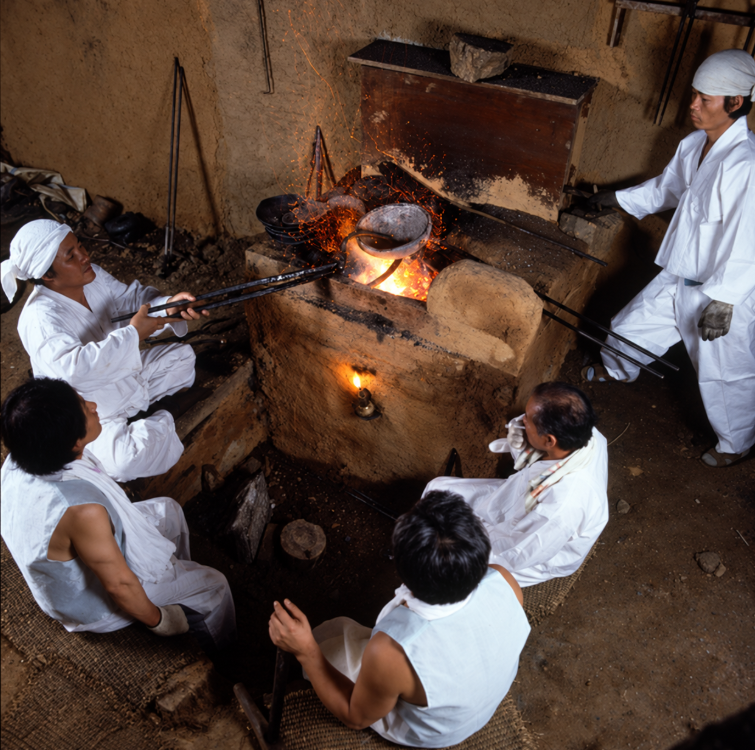 IMAGE 02 · WHAT IS YUGI
Traditional Bangjja Yugi production process
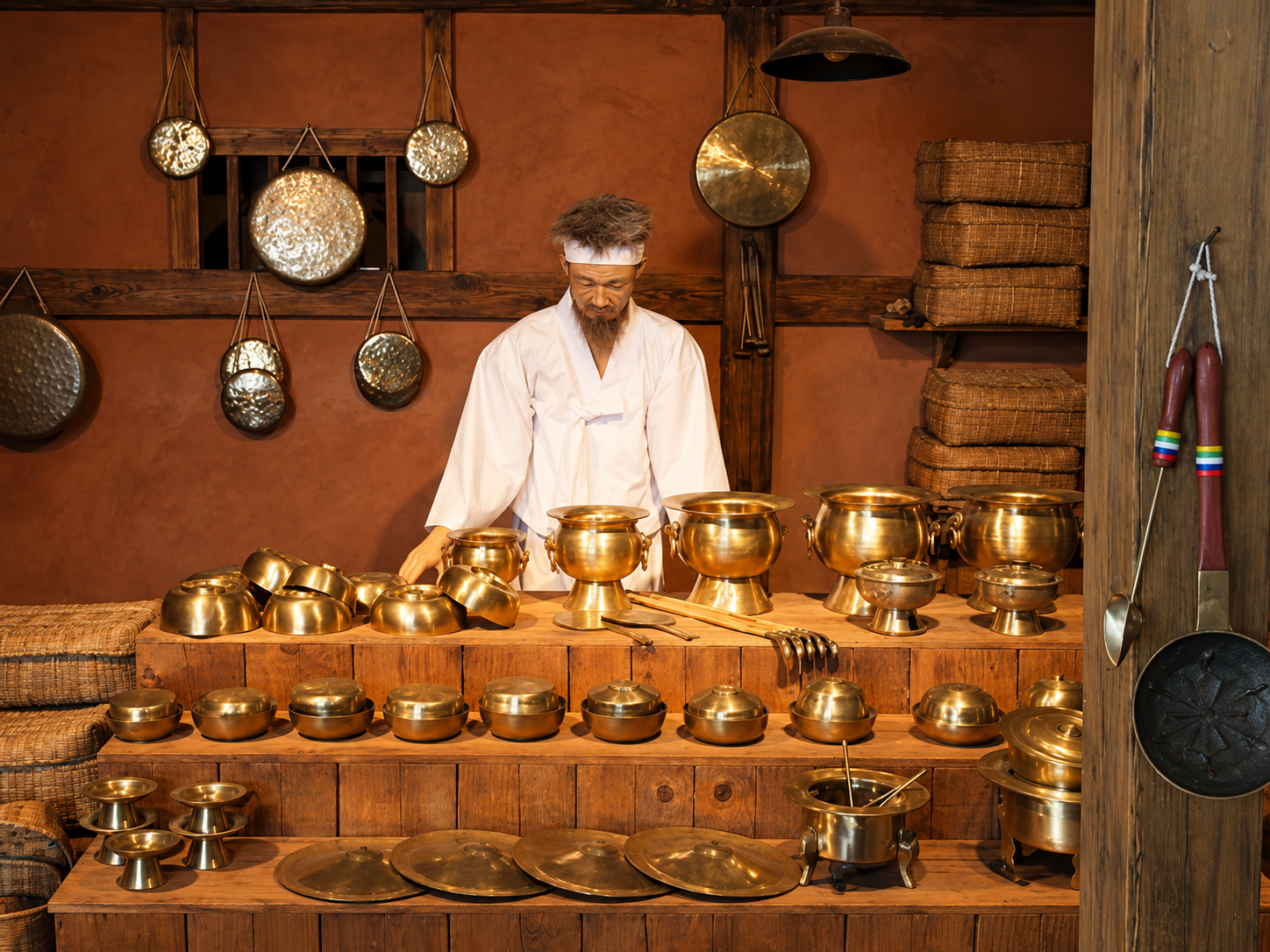 IMAGE 03 · HISTORY & USE
The history of Yugi in Korea is long. By the Silla period, metalware production was established enough to be managed through a specialized state office, and in later centuries Yugi became widely used across Korean society.
During the Joseon period, Yugi appeared in official and ritual settings, in affluent households, and as practical objects used in daily life. Regional production centers developed, and Yugi became part of the material culture of both ceremony and the home.
Its range of use is important: Yugi was never only a luxury tableware tradition. It belonged to meals, rituals, music, storage, washing, serving, and many other ordinary acts of living.
Yugi offered something different from fragile or short-lived household objects. It was substantial in the hand, suited to repeated use, and capable of being cleaned, polished, maintained, and kept in service for a long time.
Traditional accounts of Bangjja Yugi emphasize its resistance to bending and breaking, its relatively low tendency to discolor, and the way its surface can gain luster through use. Rather than hiding time, a well-used piece can carry it.
Metalware designed for repeated, long-term use.
A distinctive physical presence in the hand and on the table.
A surface that can be cleaned, polished, and maintained over time.
With care and repeated use, the surface can develop a deeper, lived-in luster.
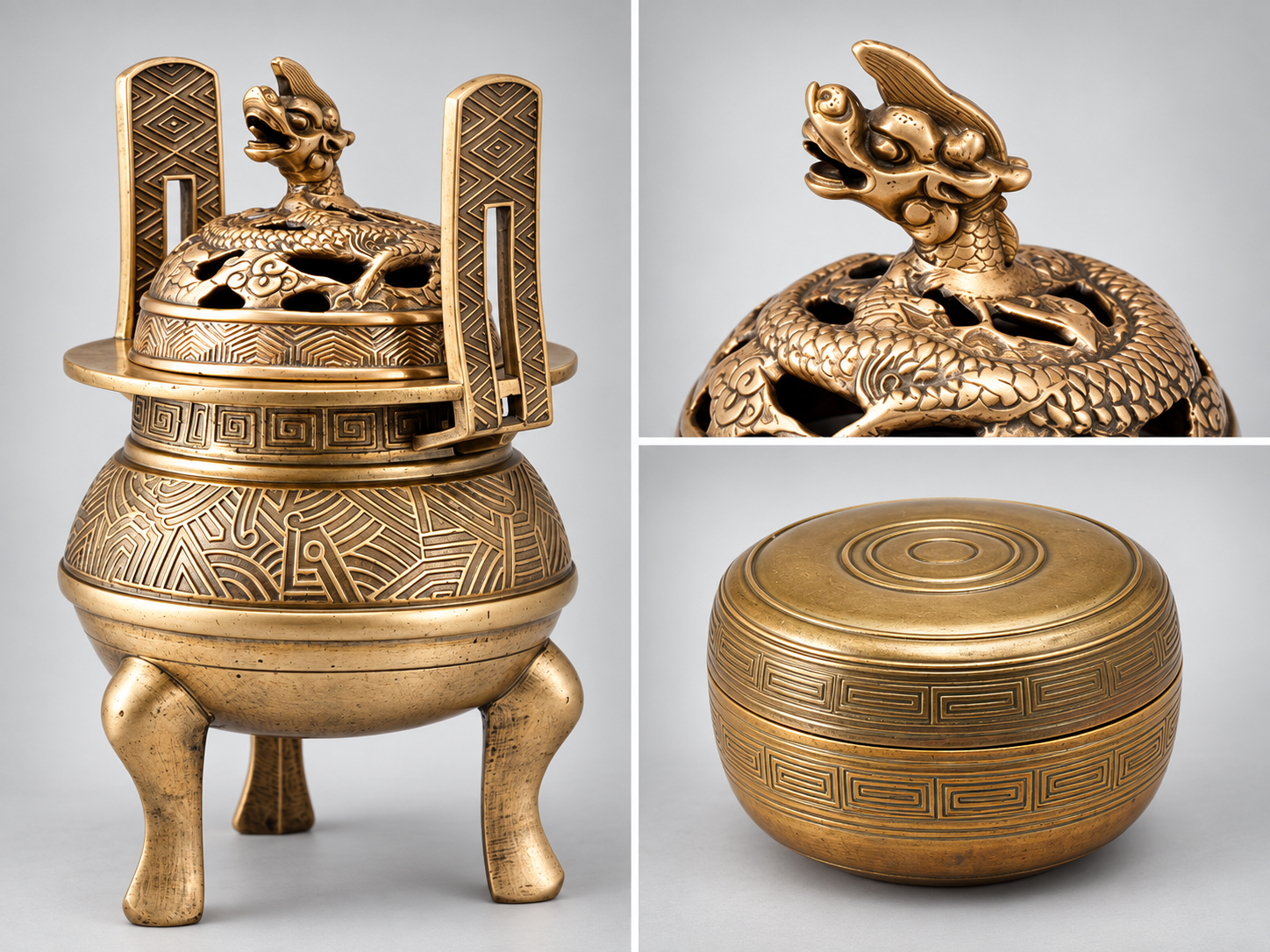 IMAGE 04 · MATERIAL & SURFACE
Joseon royal ritual censers were commonly made of Yugi, with openwork dragon and cloud motifs designed to release incense smoke.
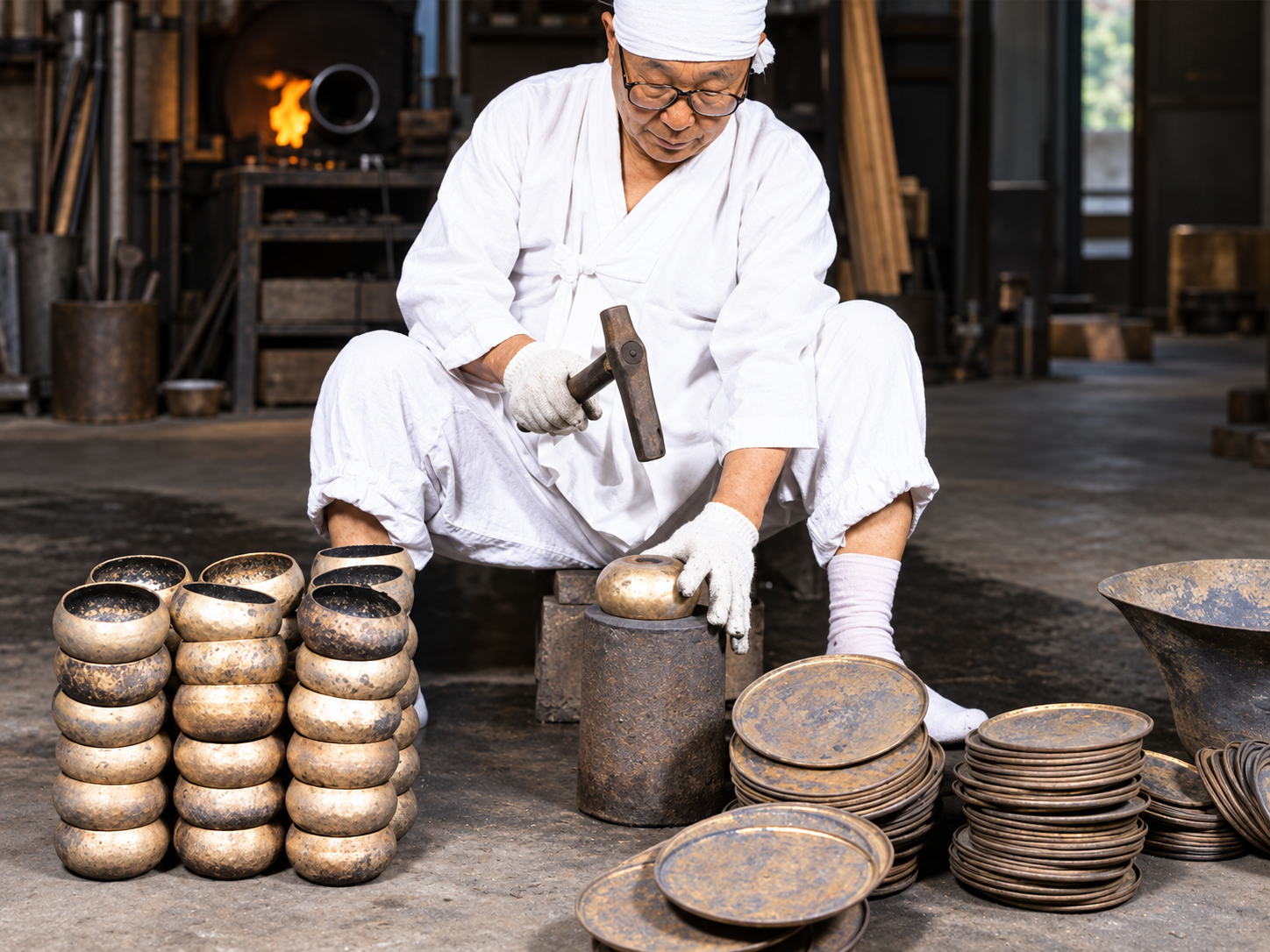 IMAGE 05 · BANGJJA / HAMMERING
The character of Korean Yugi does not come from color alone. It comes from the relationship between alloy, production method, form, surface, and use.
Cast Yugi is formed by pouring molten metal into a mold and may use copper-zinc or other copper-alloy compositions. Bangjja follows a different path: a copper-tin alloy is repeatedly heated and hammered so the form develops through forging. The maker must continually judge thickness, curve, balance, and tension.
This is why the marks of making matter. A slight variation in surface, a hammer trace, or a subtle difference in curvature can be evidence of process rather than a defect to be erased.
Bangjja is one of the most recognizable Korean Yugi traditions. Its production begins with preparing the alloy and continues through repeated cycles of heating, hammering, shaping, and finishing. The apparent simplicity of the final object is built through many accumulated actions.
Traditional process terms: Alloying (78% copper, 22% tin) · Nepim & Jejil (forging) · Gajil (finishing)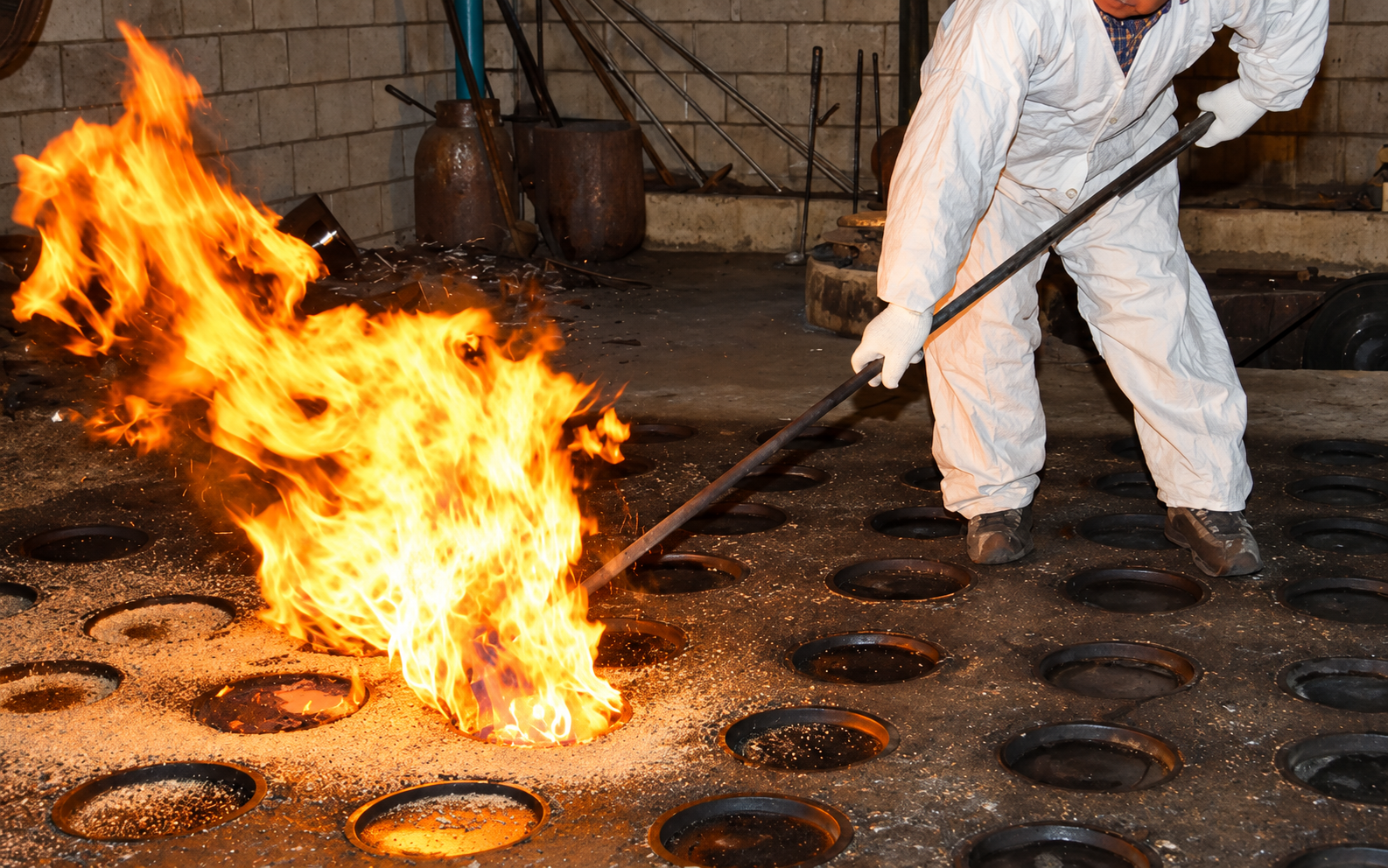 IMAGE 06 · PROCESS 01
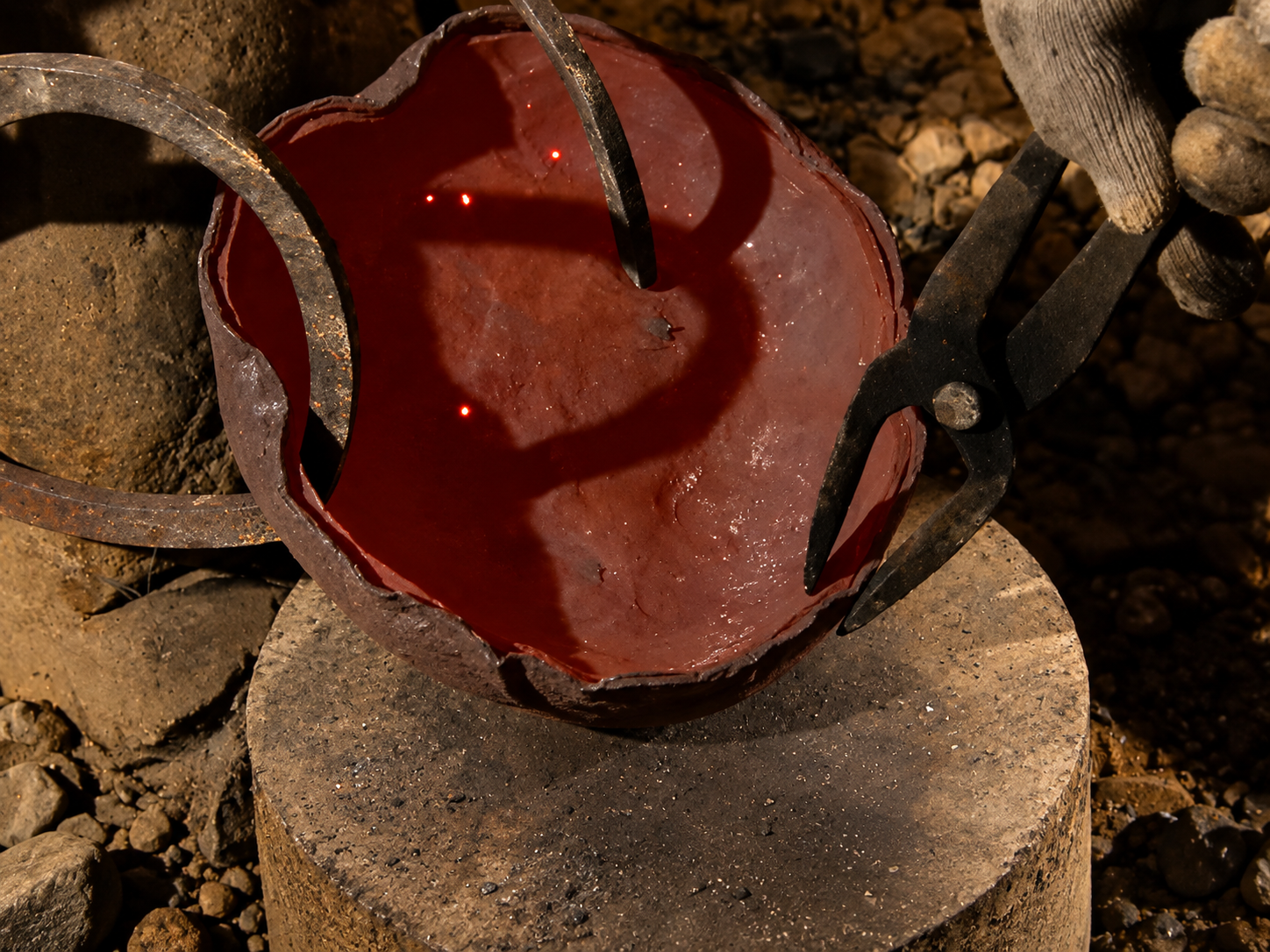 IMAGE 07 · PROCESS 02
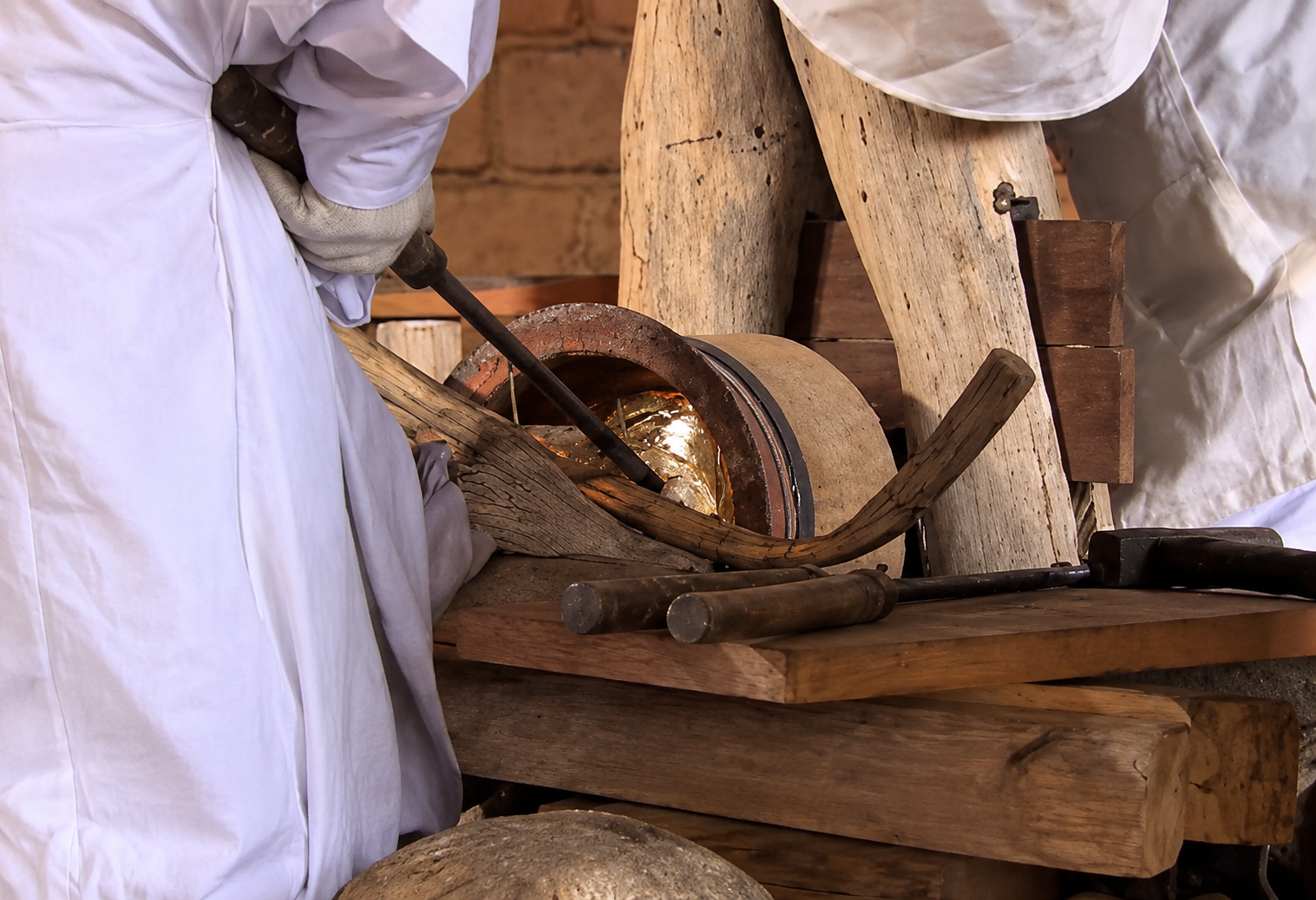 IMAGE 08 · PROCESS 03
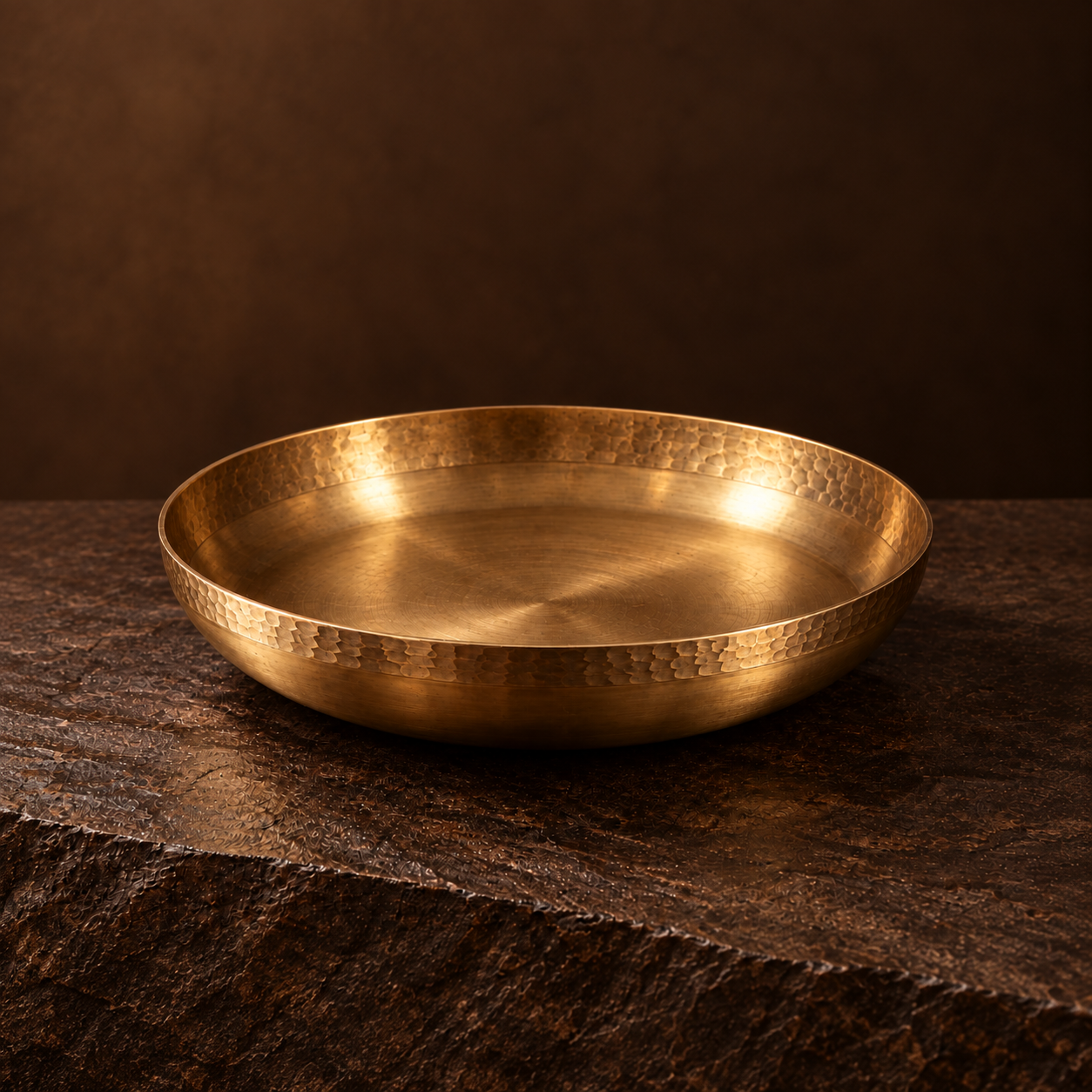 IMAGE 09 · WORKSHOP TODAY
Korean Yugi once supported regional workshops and a broad everyday market. As cheaper cast wares and later industrial tableware became widespread, everyday use of traditional Bangjja declined and many regional production centers weakened.
The craft did not disappear. It continues through artisans, workshops, heritage transmission, and modern manufacturers. But keeping a technique alive is not the same as keeping a healthy ecosystem around it.
A living craft also needs people who can make it, places that can produce it, customers who understand its value, and new reasons for the next generation to use it.
Yugi already carries value in its materials, techniques, makers, and history.
The challenge is not the craft itself, but how those strengths connect with contemporary life.
What is needed is a stronger link between tradition and use —
through research, product development, clearer communication,
new applications, and access to wider markets.
Document materials, methods, regional differences, and the people who keep them alive.
Develop proportions and forms that belong naturally on contemporary tables.
Translate craft knowledge into objects with clear functions and practical uses.
Explain why Yugi matters without reducing it to nostalgia or decoration.
Connect Korean Yugi with homes, restaurants, hotels, and tables beyond Korea.
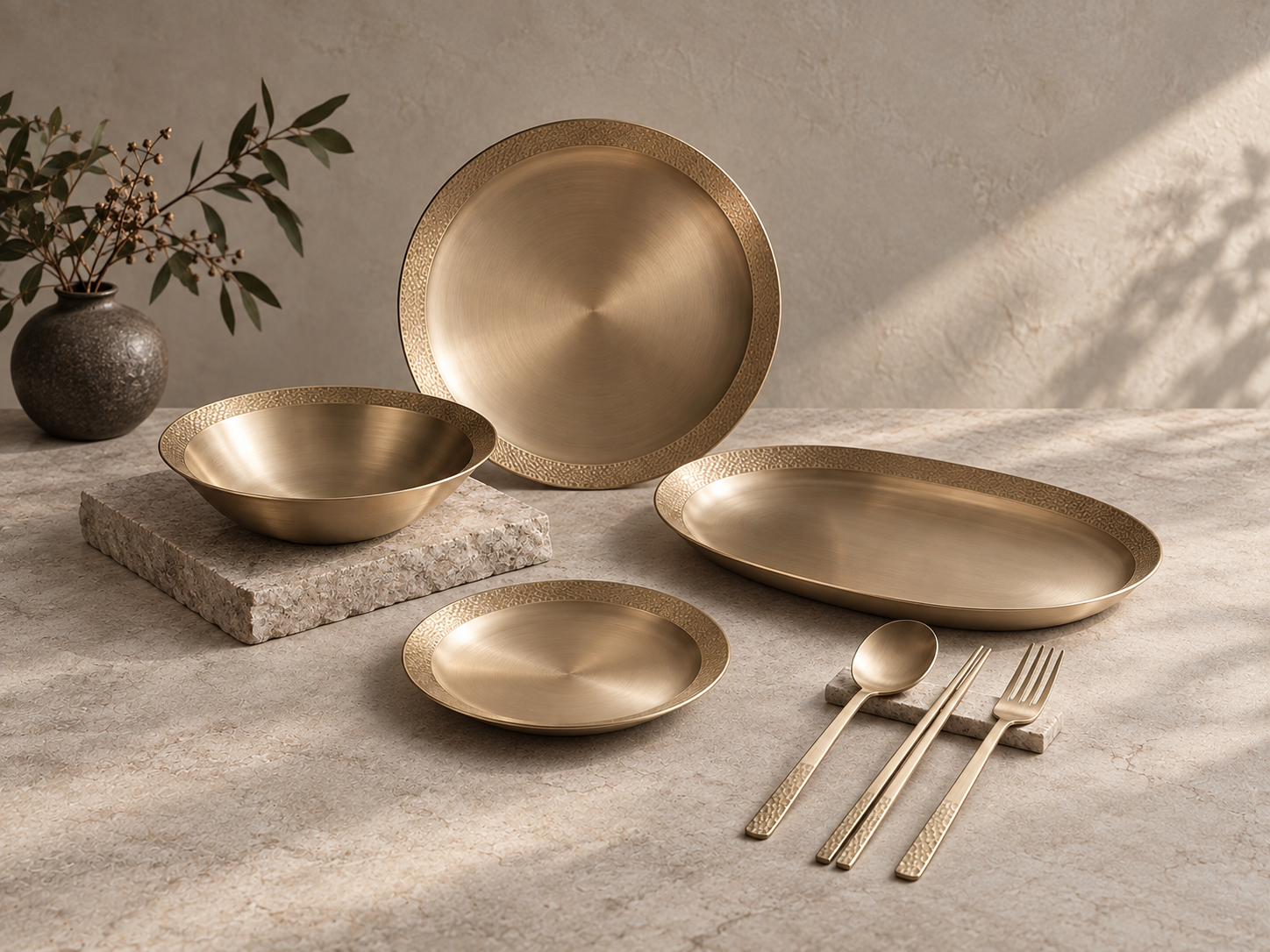 IMAGE 10 · MODERN TABLE
Traditional Korean tableware remains important,
but contemporary dining creates new contexts for Yugi.
KNNN sees this as an opportunity to extend its use —
developing new sizes, curves, proportions, and functions
while respecting the material and production logic of Yugi.
KNNN does not aim to redesign tradition away. Our role is to research what deserves to remain, work with makers, develop forms for contemporary use, and record what is made so that Yugi can meet new tables without losing its origin.
Our current direction begins with tableware: refined curves, restrained decoration, and a controlled hammered band that leaves a visible trace of making. Discreet marking, limited production, serial records, and careful packaging extend that idea from the object to its identity and record.
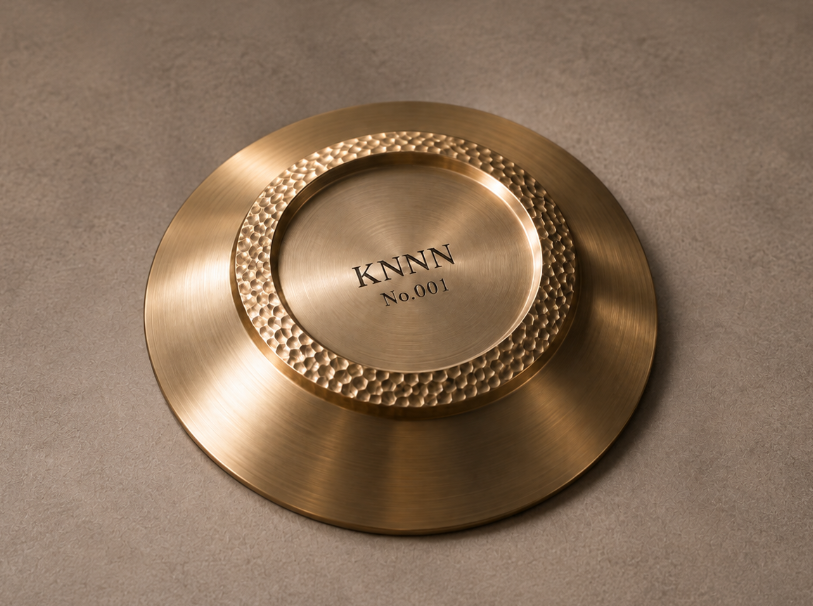 IMAGE 11 · KNNN SIGNATURE YUGI
Preserve the knowledge. Extend the use. Record what follows.
KNNN Yugi begins with tradition and continues through contemporary use.