01 · COLLECTION
KNNN Collection
Explore objects shaped through Korean materials, traditional techniques, and contemporary design.
A Short Arrow. A Guiding Tool. A Complete Archery System.
Pyeonjeon combines a remarkably short arrow with the tong-a, a guiding device, and the specialized technique required to use them together as one system.
Once an important part of Korea's military archery tradition, Pyeonjeon is far less widely practiced today. KNNN seeks to bring this remarkable archery technology to wider attention before its knowledge is lost.
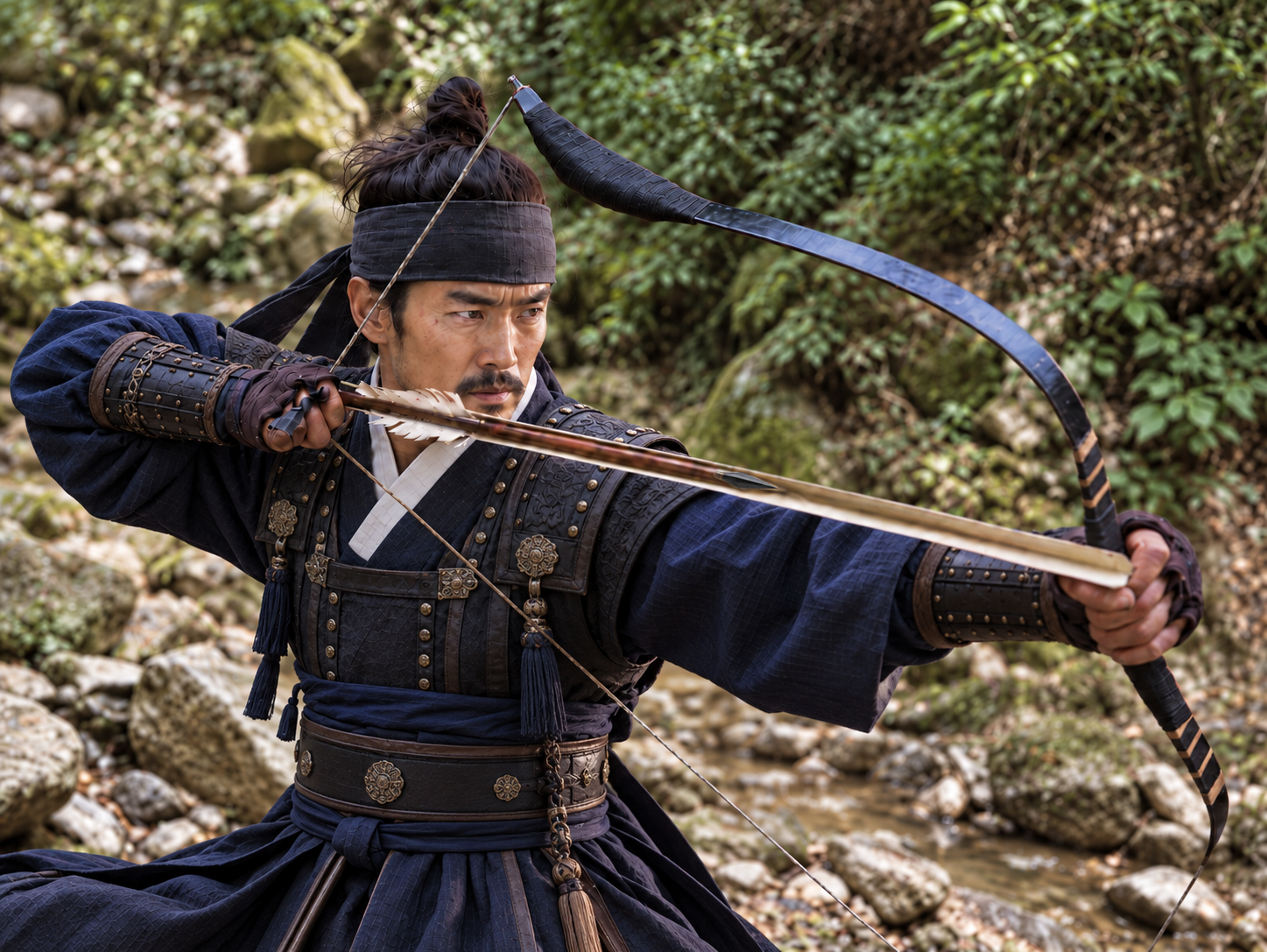 IMAGE 01 · MAIN VISUAL
Archery has existed across many cultures, shaped by different materials, landscapes, and ways of war. Korea also developed a long and deeply rooted archery tradition.
The bow served as a hunting tool, a weapon of war, a military skill, and later a discipline preserved through traditional practice.
Among Korean bows, the Gakgung — the traditional horn bow — became one of the clearest expressions of Korean bow-making knowledge.
But Pyeonjeon shows that Korean archery was not defined by the bow alone. The bow, arrow, guiding tool, and shooting technique could function together as one system.
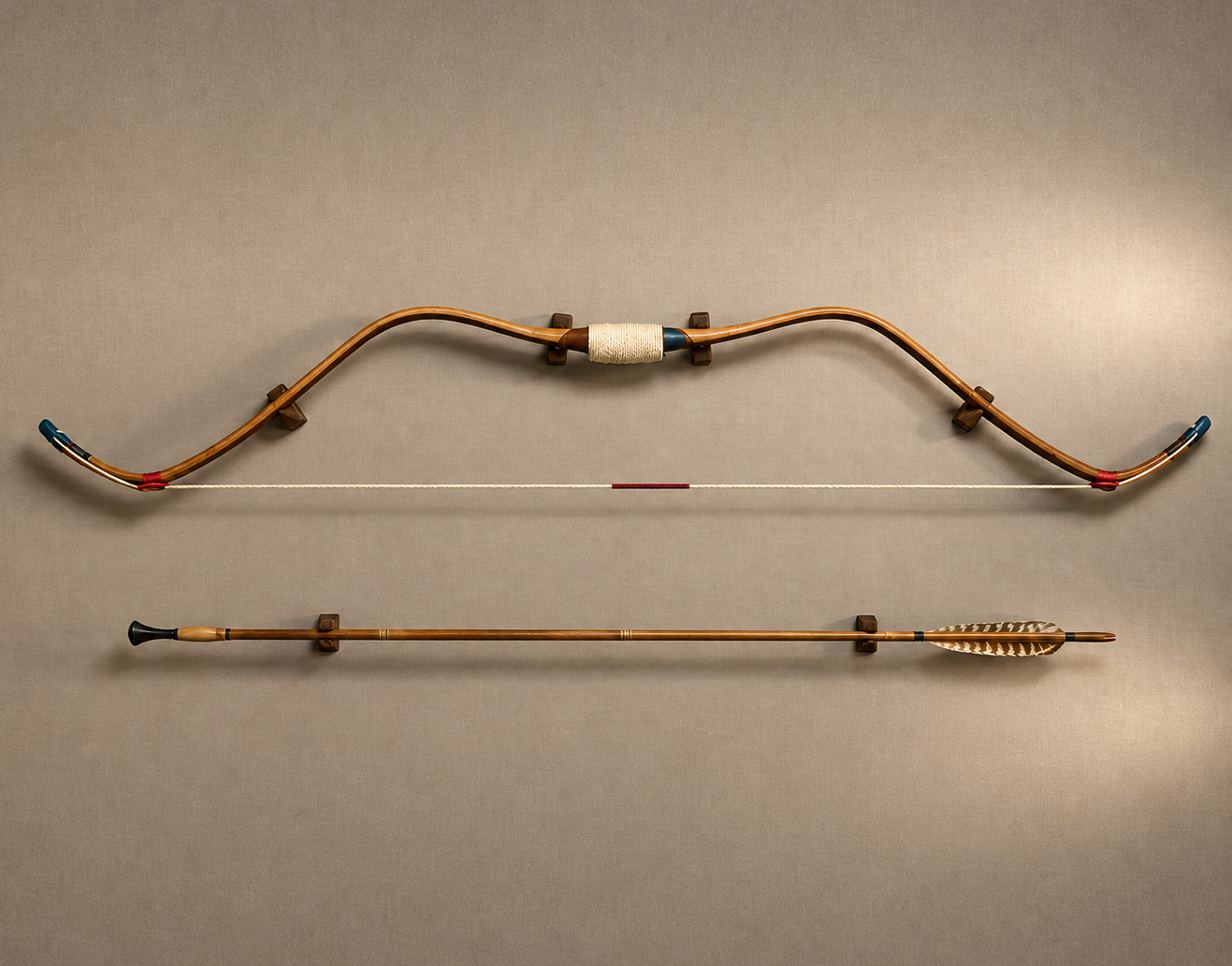 IMAGE 02 · THE KOREAN BOW
Strictly speaking, Pyeonjeon refers to the short arrow itself. Its unusual length created a practical problem: unlike a conventional arrow, it could not simply be placed on the bow and drawn in the normal way. The solution was the tong-a — a guiding tool that supports the short arrow and makes a full draw possible.
The short projectile — significantly shorter than an ordinary arrow.
The guide that supports the short arrow and directs it during release.
The source of the stored energy that launches the projectile.
The practiced method that connects the bow, tong-a, arrow, and archer into one working system.
The Pyeonjeon sits inside the tong-a. The bow is drawn to a full draw, storing energy in the bow. When the string is released, the short arrow travels forward through the tong-a and leaves as the projectile, while the tong-a remains with the archer.
The tong-a is not a second weapon. It is the tool that makes the unusually short arrow usable.
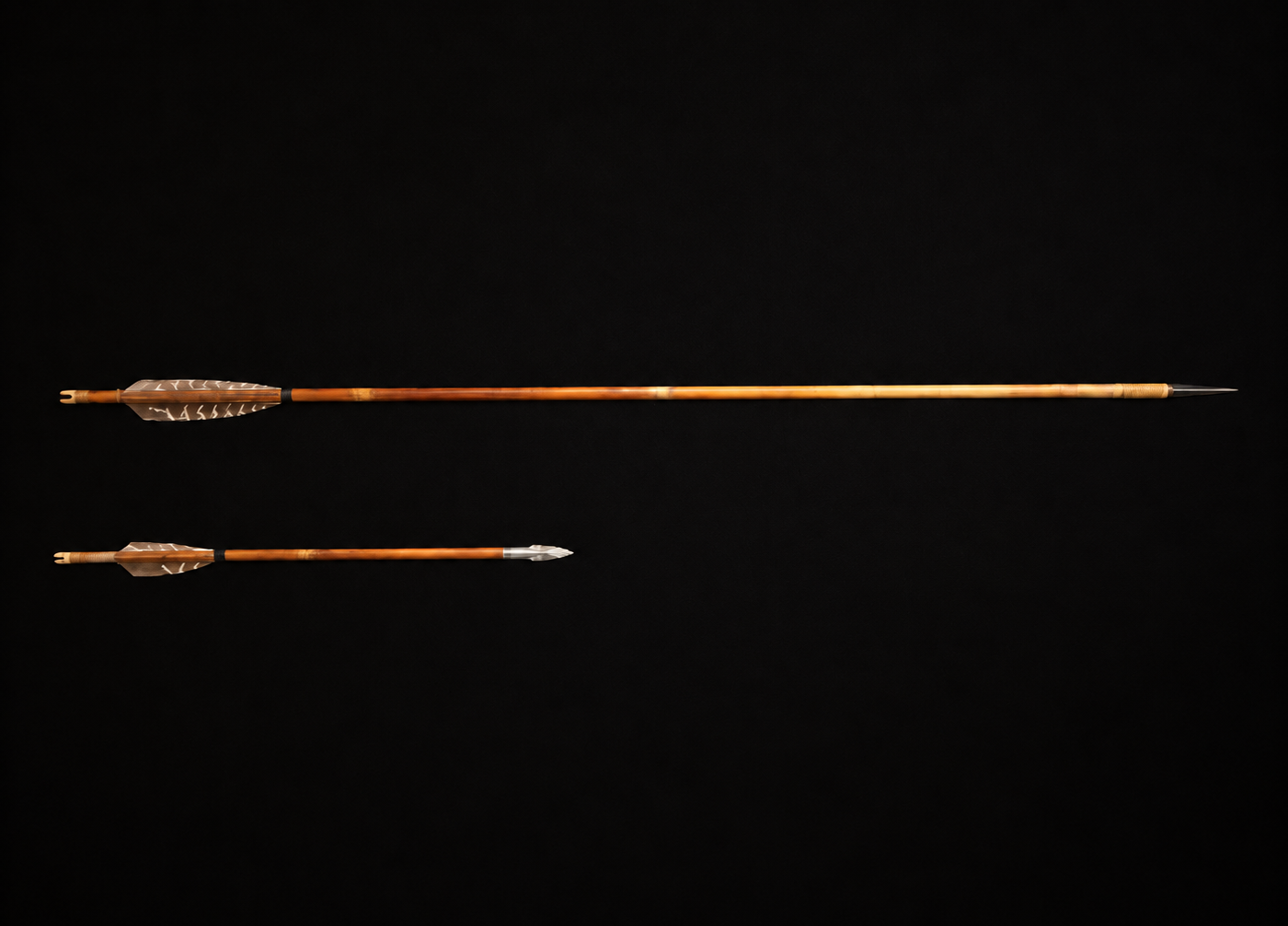 IMAGE 03 · LENGTH COMPARISON
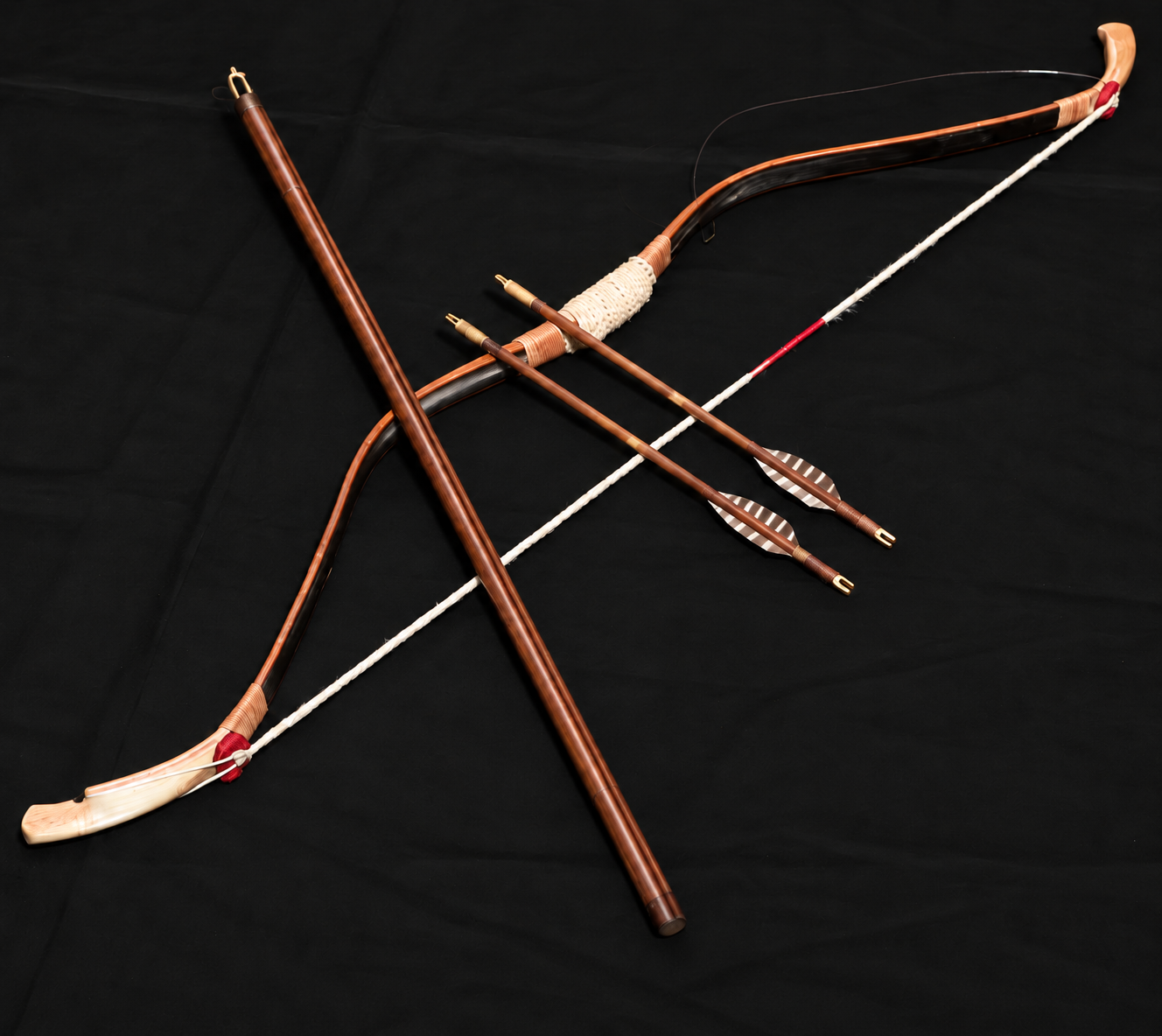 IMAGE 04 · TONG-A / OPERATION
The Pyeonjeon system was more than a shorter arrow. Its effectiveness came from the relationship between the bow, projectile, guiding tool, and the technique required to use them together.
The military value of Pyeonjeon went far beyond its short length. The complete system gave the projectile speed, range, penetrating power, and a specialized method of use.
Despite its small size, Pyeonjeon could travel considerable distance, giving the short projectile practical value in military archery.
Its short, light construction allowed the arrow to leave the bow at high speed.
Its light, compact construction gave the projectile high speed and substantial penetrating performance.
Effective use depended on more than the arrow alone. The tong-a and a practiced shooting technique were essential parts of the weapon system.
The exact origin of Pyeonjeon cannot be established with certainty. Korean records document its use by the Goryeo period, and it later became firmly associated with military archery during the Joseon dynasty.
A 1370 record in the Goryeosa describes Yi Seong-gye using Pyeonjeon during the attack on Ura Mountain Fortress. By the Joseon period, Pyeonjeon had become part of a trained military culture rather than merely an unusual type of arrow.
Historical records and later scholarship describe Pyeonjeon as a serious military projectile, with speed and penetrating performance forming important parts of its battlefield value.
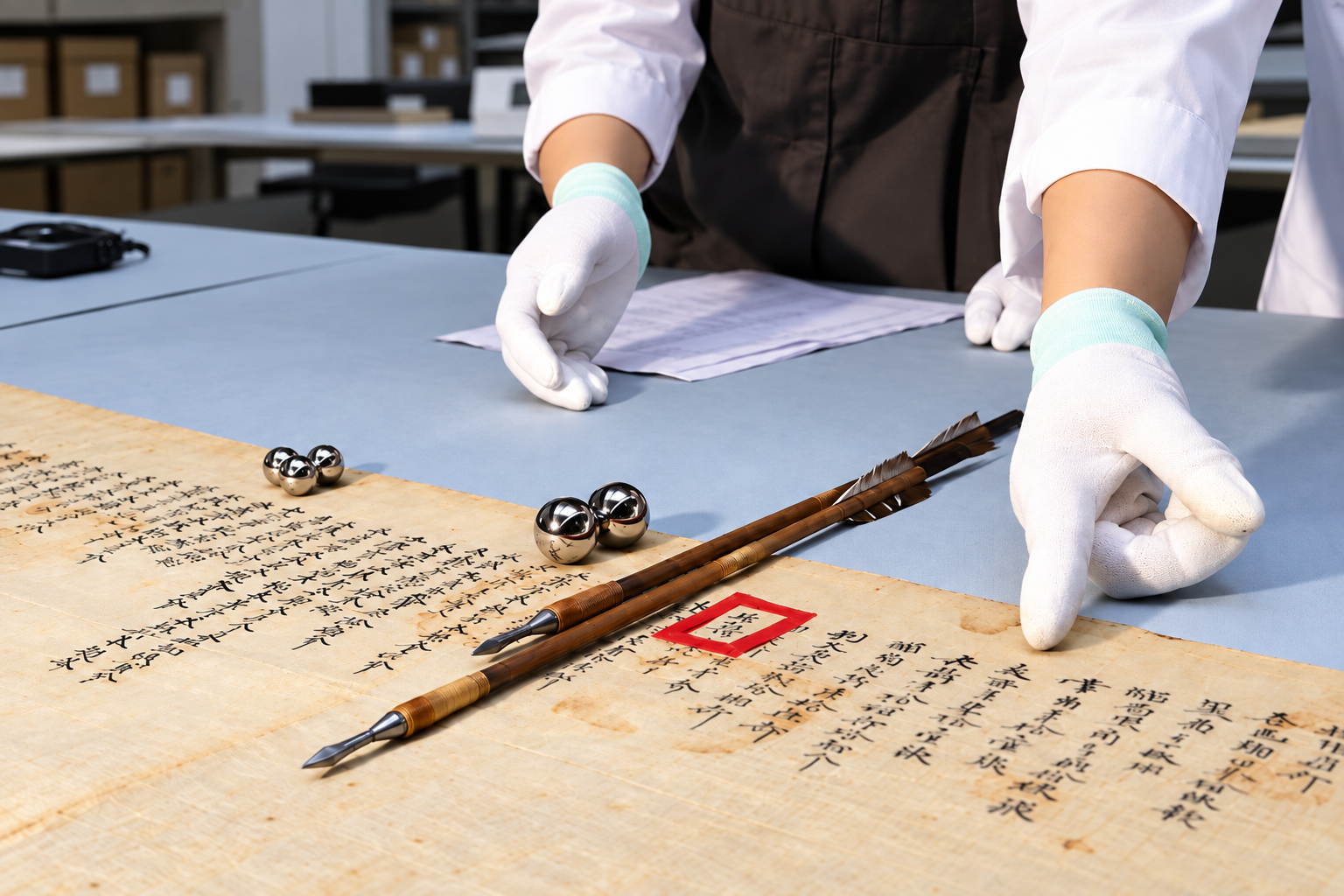 IMAGE 05 · HISTORICAL CONTEXT
In 1437, during the reign of King Sejong, the Joseon court acted to limit the spread of Pyeonjeon shooting knowledge to outsiders.
A court record states that a Japanese visitor said he had learned to shoot Pyeonjeon from soldiers at Busanpo. Concerned that the technique might gradually spread, the court ordered soldiers at the ports not to practice Pyeonjeon where foreign visitors were present.
The record is significant because it shows that Pyeonjeon was valued not only as an object, but as a method that depended on equipment, practice, and transmitted knowledge.
This is KNNN's interpretation, built on the historical facts described above.
Pyeonjeon did not depend on one extraordinary object. Its strength came from relationships: the energy stored by the bow, the radically shortened projectile, the tong-a that made that projectile usable, and the skill of the person who brought them together.
Traditional technology is often more than the object we can place in a display case. Sometimes the true technology exists in the connection between material, tool, design, movement, and human knowledge.
The bow can remain. The arrow can remain. The tong-a can remain. But if the people who know how to make, use, repair, explain, and teach them disappear, much of the tradition disappears with them.
Documentation matters. But documentation alone cannot keep a tradition alive.
A living tradition also needs makers. And makers need reasons to continue making. If there are no commissions, no customers, no projects, and no economic reason for the work to continue, preserving the knowledge becomes increasingly difficult.
This is the reality KNNN chooses to confront. We will continue to research Pyeonjeon while seeking out makers, researchers, practitioners, and specialists who can help preserve and reconstruct the knowledge surrounding it.
Where meaningful work can be produced, we intend to connect that knowledge with actual making — and to preserve the record around the finished object.
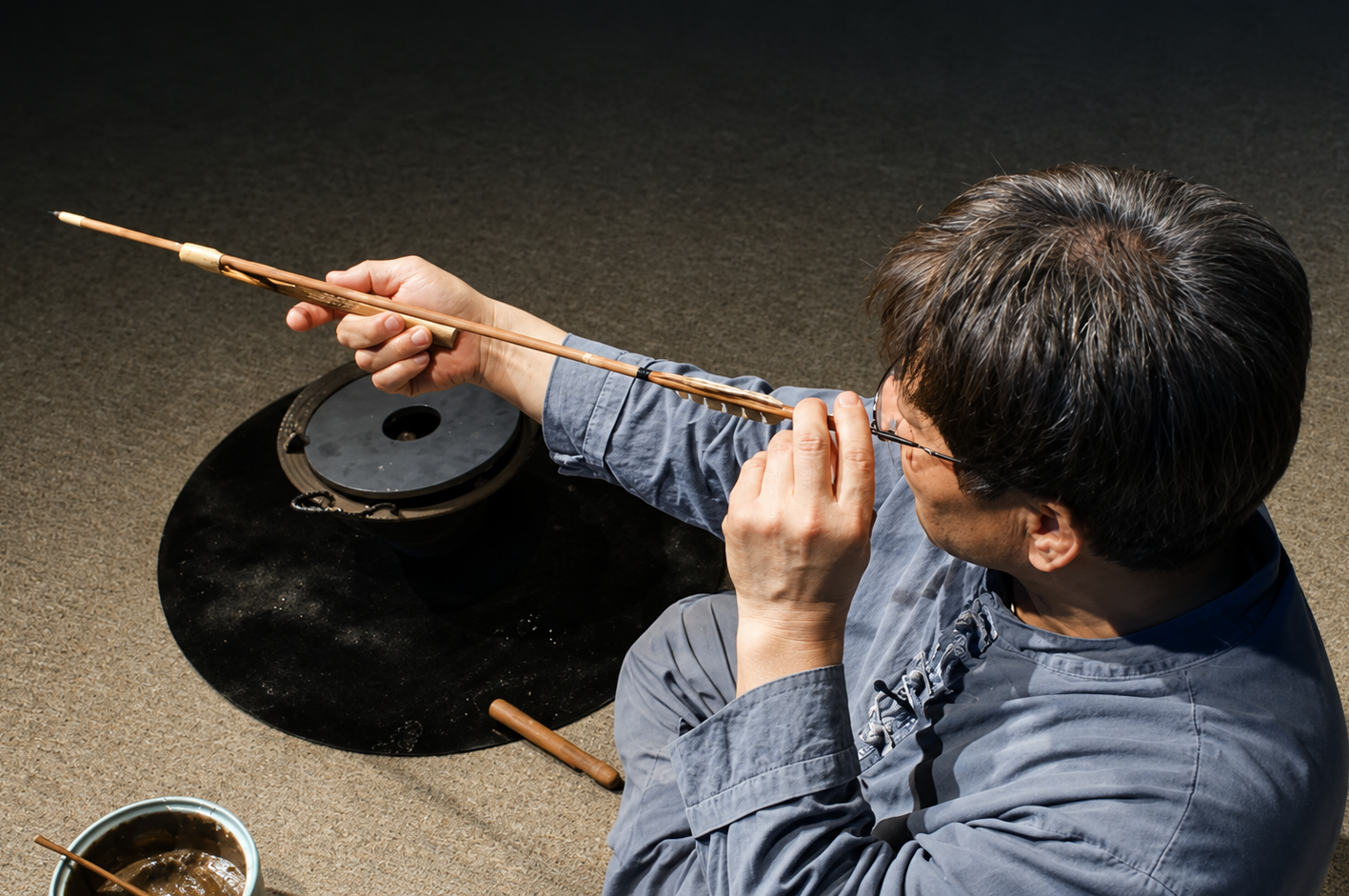 IMAGE 06 · ARTISAN & OBJECT
For custom works, research-based reproductions, artisan collaborations, institutional projects, or inquiries related to Korean traditional archery, contact KNNN.